Thank you so much for reading my blog over the years. I just wanted to let you know that I will be transitioning to Substack over the next few months, and have already posted a couple of pieces there: https://marginalamericannotes.substack.com/
If you’ve enjoyed what you’ve been reading on this blog, I hope you will consider subscribing to my Substack.
Thank you for joining me in this attempt to make my voice reach wider than myself!
Two filmmakers are on stage. I mean two women. I mean two people, I mean I. Joanna Hogg and Kelly Reichardt are on stage with Dennis Lim.
Small, deriving from the Latin word for “bad” and the Greek for “goat” : comparatively small in size : minor in rank or ability : GENTLE, SOFT : little in a way that is objectively measurable : consisting of small pieces or units : HUMILIATED, HUMBLED : I never felt so small in my life.
Joanna says it’s difficult to retrospect. To know how one thing might emerge from another.
People still wonder about Arthur Dove’s Abstraction No. 2, painted between 1910 and 1911, just 8 ½ by 10 ½ inches in size. It is unusual, for its time, in being so unapologetically abstract.
Kelly just wants to move on. She always thinks she’s going to do something different.
How great it would be to not be so linear.
It’s interesting, Joanna says, she has a sense that she herself would like more story. But the way she makes her films will not allow for this.
It has to come about so naturally, she says. Like a flower maybe, or a vase you shape without your eyes.
The lenses on Dennis Lim’s glasses. Glints of light from the overhead lamps.
Nothing needs to come about for this to work. Holding a finger before the light. Broken as the ground is dark.
Clement Greenberg thought Paul Klee was a major minor painter. Beethoven’s string quartet No. 15, his opus 132, is in the minor key of A.
There appears to be a relationship between Manny Farber’s notion of termite art and Theodor Adorno’s conception of articulation.
Arthur Dove’s paintings are often quite small.
Small is not equivalent to minor.
Dennis is asking questions about their process.
Joanna says it’s really difficult to describe what she does. It takes her as long to write her story or whatever you might call it as it does to write a script.
Kelly says writing scripts involves a lot of hanging out. Taking things apart and rearranging and connecting things.
Joanna says there’s always too much in her brain to fit into any one film. All the things we’re told not to do. These are the things that she does.
Kelly’s next film, in which an American “loser” living in 1970s New England steals four Arthur Dove paintings from the fictional Framingham Museum of Art, will be titled The Mastermind.
Abstraction No. 2 reflects Dove’s intention to abstract from carefully observed nature, to capture a fleeting moment or event in the physical world.
As an American director Kelly can’t help thinking about money.
Translations of experience, Joanna says, full of beginnings without ends. Initiations riddled with losses.
In the late 1920’s, Arthur Dove was searching for something in color, something he referred to as “a condition of light.”
A fleeting moment of a small moving thing glimpsed only for a second in its sudden bursts of bright yellow and deep pink.
Drops of rain on rails. Screws of brooks and twines. Lobes of trees. Lightly hinged over this desk. Eyelashes over pencil marking lines and copying out. Coping with not writing now through reading. Pulling out words like teeth or hair or biting off one’s nails unconsciously for spite. Incorporating symbols written sounding. Trying out. Spilling tea and juicy eyes. Eyelids like leaves reflect in glass. Also of the bones sleeved in flesh. Hugging sweater cables tight against my chest. Graphite covered knuckles staining snow-white colored sheets.
I’d been thinking a lot about this course, partly inspired by reading Rachel Cusk’s latest novel, Parade, a book that narrates the changing position of the female artist in a male dominated world, a novel that also meditates, albeit implicitly, on femaleness itself, and that recognizes that femaleness may also be embodied in a man, opening a door to a different kind of artist, to a different kind of art making – a kind of art making that is not about domination and control but submission to the work itself, along with an openness to what might happen, making possible a kind of power gained precisely through its relinquishment – a genuine empowerment. And it is, in part, this question of femaleness and maleness that intrigues me, and the weaving of this question through a life and through a work.
All the artists we meet in Parade are named G. The first G whom we meet—a dominating man, a misogynistic painter based on George Baselitz—is a male artist.
The writer within us, and what are willing to open ourselves up to? Ourselves and then our lives?
We are at a place in time when we can allow the writer within us to emerge, when this relinquishment, which is also an empowerment, has become, at least for most of us, a genuine possibility.
The “is” in the title for this course is quite intentional. The artists whose work we will be reading and looking at and discussing are all women, “The woman is an artist”; but the artist we will be exploring here is also female in this larger sense, “The artist is a woman.”
The final artist named G we meet in Parade — a man who became famous while working anonymously under a pseudonym (based on the French film director Eric Rohmer who was born under the name of either Jean Marie Maurice Schérer or Maurice Henri Joseph Schérer – this uncertainty is itself beautiful), a man for whom “invisibility was [the] conduit to self-expression,” a man who wondered why “a work need[ed] to be identified with a person,” a man who dreamed of becoming a camera—is a female artist.
This course presents us with an opportunity to meditate explicitly (through our class discussions) upon these ideas, and implicitly (through the works we will be engaging with so closely, through the words we will be writing), while also, through this process of paying attention (paying more attention) and letting ourselves go, making something from ourselves that is also something more.
And it was like this. I didn’t know what it was but I knew that whatever it was was something that I liked and that it would continue to go on even after I stopped liking it. And something else was coming on that seemed to intrude upon the mood but didn’t intrude upon the mood at all and only complemented it. And it was continuing the same and not the same and I liked that about it because I didn’t want the same and the same and then the same as I’d already had too much of that. And it was enough. And it seemed about to stop, but instead it was continuing, continuing to continue even if I wasn’t ready for that as it did not take me into account. And I also liked that about it. I liked that a lot. I even thought I might be in Morocco, though I had no idea about Morocco, or very little idea about Morocco, as I had never been to Morocco or even been close to being in Morocco. I closed my eyes and was taking in the atmosphere, the atmosphere of Morocco and not Morocco. I was translating Morocco or my idea of Morocco by having no idea about Morocco, but only a mood about Morocco, though I was calling it “Morocco,” although I knew that it was something else, and also that this didn’t matter as for a few moments it actually was Morocco or at least an atmosphere of Morocco and the fog was coming in and we were being warned by something in the atmosphere that very subtly had changed although the fog itself was not and would not at any point become visible. And I felt a deep longing for something like the stutter of a car engine that could not be started but was nonetheless holding on and stuttering itself into another kind of being, a moving being that could not move at all and yet felt right to me and I was responding to an echo in the stutter that I could not articulate, an off color that was not a joke but an absorbing of itself into a larger canvas than I was capable of looking at at once, all of it at once. It was an instant that was not an ounce of anything. And this instant kept insisting in its no longer Moroccan way that I might be onto something or that this something may be onto me or maybe someone else, somebody else, as it might very easily just pass me by without an interruption of its stutter as another way of being what it was and not itself.
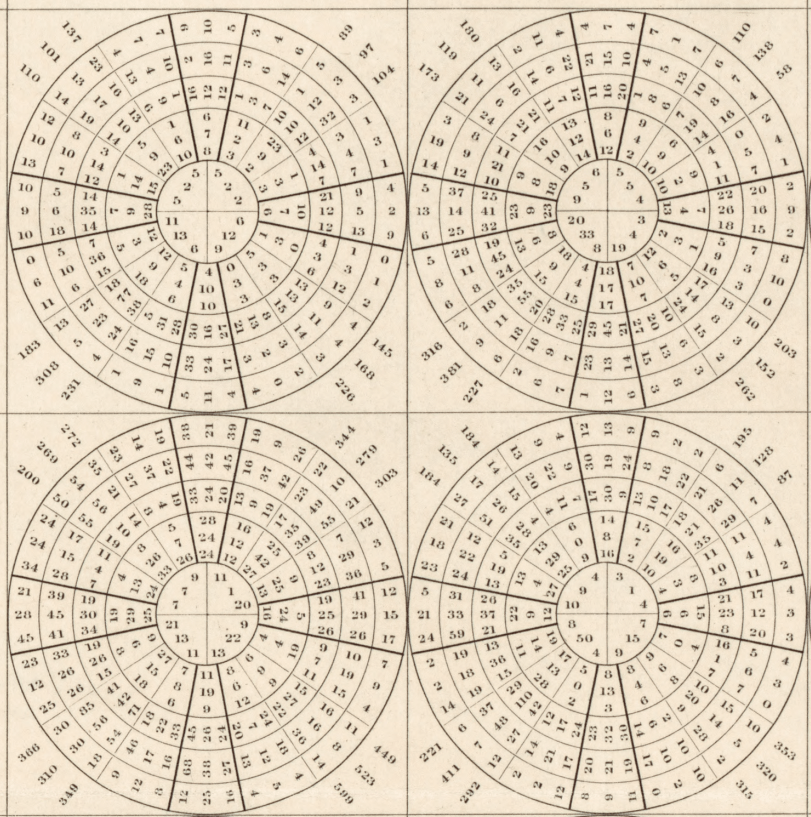
In like manner it gives the most concise presentation. Only the lines covered by the record. The recorder exposed at the station. The rhythms of the voice resounding. To collect suitable information. It means we take the thick with the thin.
Tolls the knell of parting day. The warm precincts diagram. The table overleaf presiding observatories as the frontier preference in the winter months on oceanic coasts place in the heavens.
So this is language fresh as olives. With each hour of each month the green color covers many parts and the winds in the upper air survive. For the rest of the year the reader not cradled and carried and to have to rely on our recollection on successive scenes, on notes about the cloud, with humidity so little they become fractious.
And a sufficient number of stars. Kind and variation would be found which is appropriate to line. A rugged discontinuity and a mild continuity. A paratactic trek from week to week, similarly arranged, which is very near the antipodes of Kew. And then a rhythmical sequence. Gardens and Virginia. And the rainfall at Wellington. The normal pressure at Kew is a complicated one.
The order to enable us to quote merce at present at the higher latitudes. We should like to treat wind by way of contrast. The Dutch East Indies. Difficulty of knowing the steps of black block at the margin. Recognizing, as we must, a kind of violence that separately belongs underneath the diagram of temperature.
We wish to listen to a very efficient performer which expresses itself otherwise. For our immediate purpose it is sufficient to pursue the subject. A similar statement would be generally true. The things about the weather don’t just pass.
The week and month are different. The statement that any sequence in this manner with suitable modifications show something which is comparable or in any way like the normal seasonal rhythm and with the other rhythms or periodicities made in the summer of a cold winter following.
It was investigated and is in fact precision obviously taken apart not to appear in the display. If we look on the map in those days it was not easy when we were thinking of the pageantry of the sky in the prologue. Here is an example. The last of the three. For readers in the general inference quoted instead of regarding a whole scheme of phraseology. The surface air noticed that the tracing of the behavior is based. And the new practice finds expression.
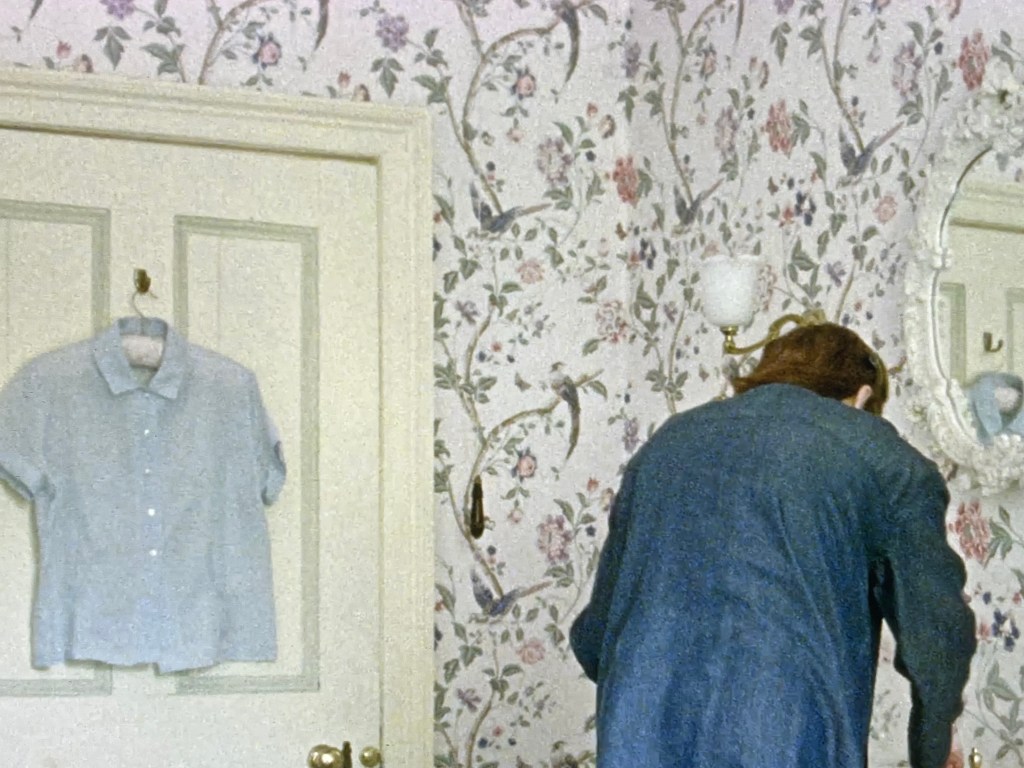
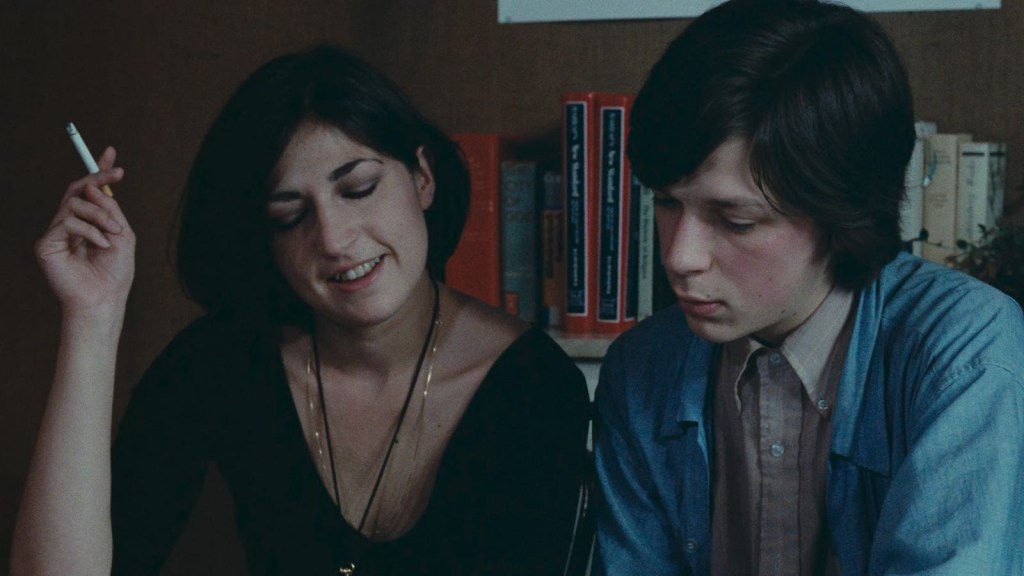
A woman is showing a boy her photographs. They are odd in that in all of them something is always missing. In one there is a man looking at the viewer. He is naked shoulders and head and arms and nothing else. The rest is just a blur. She tells the boy that the man was not posing in the nude when she took his picture. He was wearing underwear and pants. But these have been erased from the image and you cannot any longer see them. The woman is identified (assuming she is the woman referred to in the title) as Alix. The boy is addressed as Martin and he is the son of the director who you later learn committed suicide. The woman is also dead, although you can see her in the film where she appears to be alive and she is showing Martin her photographs. She comments on them with animation, and, perhaps, a restrained excitement, though you cannot be sure what she is saying as you do not speak French and they are speaking in French and the movie is not subtitled, though it is less of a movie than it is a short film, assuming it is time that allows you to make this distinction and not something else.



 marginalamericannotes.com