
Cay’s death was not surprising. Extremity and death hung around her and fed the work. She took on Akhmatova’s signature haircut. As she speaks, three or more different ideas often find themselves in one sentence. She layers her words like her work layers paint over text, over fabric, over wood, or like the interview tape layers her voice singing above the expresso maker, nearby conversations, and all the other noises at the coffee shop.
I’m charged, I guess. It’s a painter’s energy. Nothing but needles and broken glass. Her work is very personal, and it’s not difficult to see that she prefers a private life.
Bahnmiller is extremely well-read and collects all kinds of texts—books, poems, philosophy. If I read it over and over, it becomes a painting. Her first show was nothing but a study, paintings and blueprints, very Bauhaus and severe. My palette was very cement-like and gray and earthy.
Her childhood stories pervade her works and persona. Ercilla, who helped her develop multiple language skills, a love of local parks and museums, and encouraged her creativity. It can get confusing no matter how well you know her biography. It glows in the dark and has music. ‘Sweet Dreams.’ She remembers that her nanny had to sit next to Adolf Eichmann on the bus before he was caught in 1961. It just doesn’t seem to be a memory. It was a matter of, I’ve always made things and I’ve always written. Her work calls out injustices. I find that most of the world isn’t sensitive enough.
Quotations are from pages she dog-eared and underlined—often writing ‘Imp.’ On trees as bare as calligraphy. One form of this poetry of space—apart from the poetry that can be created by combinations of lines, forms, colors, objects in their natural state, as one finds them in all the arts—is the language of signs.
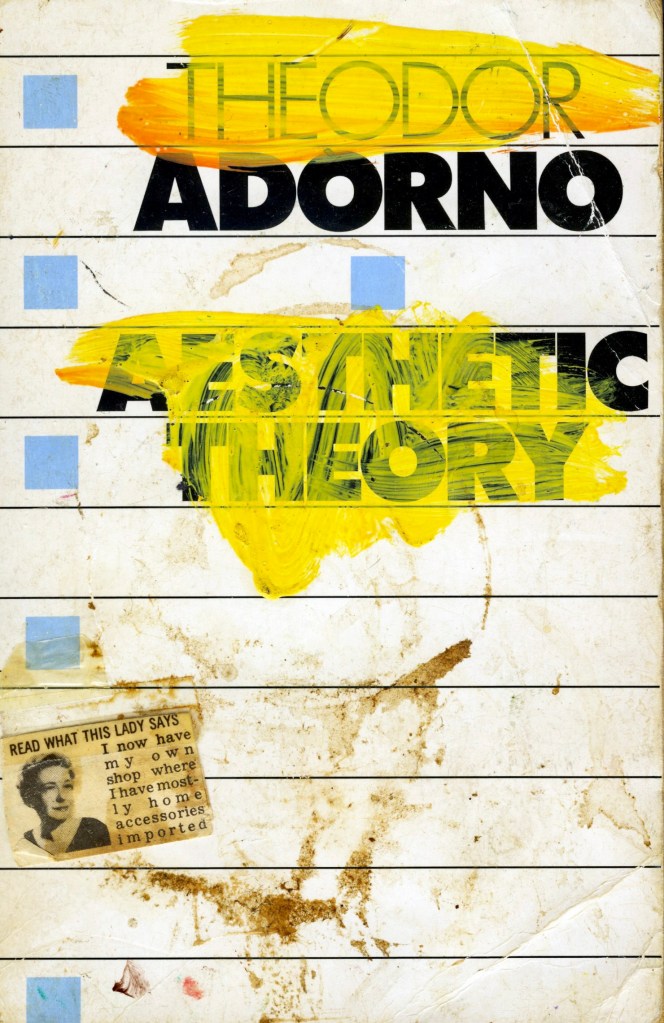
Bahnmiller painted the covers of her favorite books and talked on the telephone nonstop. She was a bricoleur and scavenged from the streets and thrift shops. This work is the archeological ruin of Detroit, a city steeped in sedimentation of light, or as the architect Louis Kahn wrote, ‘spent material.’
The stark absence of an ‘outer’ world necessitates the imaging of an interior—Dickinson’s ‘Bright absentee.’ Several years before her death, she began giving away books, rolling pins, artwork, artifacts.
Her talents were bound up with dark emotional social and urban forces she couldn’t control. I have nothing to hide. I was raped thirteen years ago. Besides almost losing my life and having my back broken, to have the man that did it walk. Sometimes, justice is bought.
She saw the book as a container for everything. She held poetry, along with the late novels of Henry James, above everything else.
Five years to regain a bit of the life I once had. To go back to dreams. Intense summer heat . . . HOOPS, MED, obsession, WHITE HEAT, MEN, the lack of fear to anything. The desire to go fast, to speed in a car, run, fly . . . at the blue tarp.
The decision to be a painter was one I never made. It is what one always was and is. Locating, placing, documenting, establishing, grounding oneself. Color Xeroxes, notebooks, drawings and paintings result from investigations of specific areas. The thorough quality of observation and documentation. It was an investigative and conceptual project she never really left.
Over the years—fatigue of writing, of being witness to oak trees and birches and new paths. Beat against the sobbing les maudits of yellow skin possibilities, late November sunlight not unlike Eluard’s light.
And I lose her like a little sunlight in cold water. Men shout, Hammer. And I see her suffer. And I see her light.
The last time I felt such Peace, my life was taken from me.
 marginalamericannotes.com