You asked me how I’m getting on.
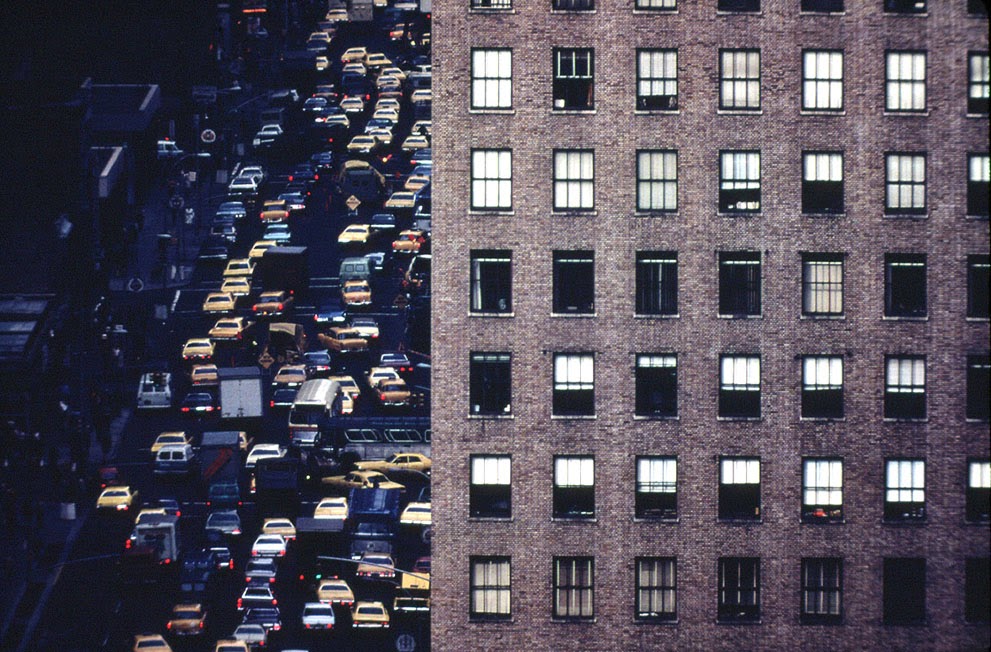
There are times I suffer isolation. Trying to write I do anything to avoid beginning, yet I am always beginning. Starting again I want and need to be interrupted, and yet it’s only when I am not that I can work. Sitting here in this café, in loud music, alone, at a low table in the back corner, people, kids, dogs, no one I know, by a window overlooking an old brick wall, I am happy. Just to see the others, just to look outside, is enough. Not needing to be close. And anyway, it’s already begun to rain and I didn’t bring a raincoat and I don’t have an umbrella. And the stained brick wall I see outside the window, and the ivy climbing up and up and up, is a calming in this gentle rain.
When I finish up a project — learn through doing something, ‘master’ something — I move on to something else — photography to film to writing and composing ‘something else.’ And whatever that might be.
But the creative process is difficult. She never thought it was good enough. She complained about the blocks. It is also effort and repeated effort. She could not make something and then enjoy the whole process of its creation.
Today I gained access to Magda’s diary. It was behind a pile of her treated New York City guidebooks. She said that I could have it for a while if I enjoyed, she said, to read it, even use it for my work. Do a treatment of my life, she said, and then, why not?
I found this in her diary, it reads I chose to dance with an abstraction. An abstraction of a city. An abstraction of a life. It is preferable to, as they say here in the U.S.A., ‘fleshing things out.’
That’s what she said as she cut and pasted notes and pictures (and there were also several drawings) onto the newest version of her Guide to the City of New York and its Life. Always reworking the pages, worrying their surfaces with her fingers, looking straight into the chasms and then smiling, though this smile was but an automatic response, a reaction to the sweep of unspoiled air that breezed across her face and then flew by. It wasn’t like this anymore, she said, and this was good. Or at least it was fine. She accepted it. And shouldn’t that be enough? And it was enough. And she was right. It was the paintings over and the rhythms of the words that really counted, as they fell backward, opened, and provided a place for us to sleepwalk into. This was, indeed, true, she felt. It was right. And she’d been noting things that linked them all together, both in marginal notations and her notes, for some time, tying their lives together like a string, stringing their deaths up on a line that you can walk along and post things, add things over, write on.
Difficulty of speech. Feeling at home but not at home. Speaking how I used to speak when I was in South Africa some years before. When I was a Mrs. When I had a husband. But I am not in South Africa. And my name has always been my own. I am not with the same people. I am living in Solonga’s flat (thank you, Geert, for making this possible) and I am mostly on my own, except for Magda and her sometimes visits, except for you when you’re in town. I encounter what I am now calling misunderstanding but which is something else that needs to be defined in a more apt way. It makes me very self-conscious and, I am afraid, sometimes, even paranoid.
I also found a much older note with the same handwriting, on an inserted piece of paper dating from 1993.
So many people were present that she really cared for, people she admired, secretly loved. A strong sensation of time passing, flying by overcame her. This odd sensation she usually felt when she smelled the Wattle Tree; a gentle tree with tiny yellow soft bubbles that reeked of time. She could not describe it any other way; this scent of time.
A Wattle tree, also known as an Acacia, most commonly known as the golden wattle, is a tree native to southeastern South Australia. It has now become naturalized, the way that I almost became naturalized (and it was also at this time, I now learn from looking at the dates, that she was writing this in Eastern Europe), in South Africa. You will not find it in New York.
There was a strong sensation of time overpassing her, moving along somehow, without her consent. But this is not unusual. We surely all feel shortchanged by what is designated ‘time’ by other people.
It struck me that she had used fiction in her diary. I mean that she had been writing in the third person rather than the first. Why did she do that then, and, not now?
I want to be the owner of new memories without having to go through a new experience.
I want to absorb my subjects’ memories for myself, but without living their lives.
And if one cannot genuinely call that a memory, then all she wants is the representation of it; to hold in her hands the aesthetics of a memory embodied in something like a photograph.
To become someone like Francesca Woodman for whom photographs become my memories.
I spend more time reading in her diary and drinking from my tea at the café, and it is no longer raining, and it is no longer overcast, and the light is changing, as the sun, or so we say it in this way because we see it in this way, is setting, and its presence will be noted. The white marble table top near the window is covered in bright sunlight, so that I am for a moment blinded, cannot see other people in the room. Now one-fifth of the marble is in shadow and the little rectangle on the woodwork that I could actually see change before is gone. And the heat and the light of the sun has moved off of me toward the empty chair and wall opposite, and the table itself is now more than half in shadow.
 marginalamericannotes.com